Domov / Novinky / Priemyselné správy / How to Use Men's Compression Socks for Swollen Ankles: Fit, Timing, and Everyday Wear
How to Use Men's Compression Socks for Swollen Ankles: Fit, Timing, and Everyday Wear
A sock line that is still pressed into your ankle at six in the evening is not a laundry problem. It usually means fluid has pooled in your lower leg during the day, and the fix is not a looser sock. It is a sock that puts the right amount of pressure in the right place at the right time.
Here is the short answer for men dealing with swollen ankles. Choose a measured calf-length or knee-high compression sock in the 15 to 20 mmHg range for everyday puffiness, put it on before you stand up in the morning, and wear it for 8 to 12 hours. Low-cut ankle socks and tight everyday socks rarely solve the problem, because graduated pressure has to be spread along the leg rather than squeezed into a single band above the ankle bone.
Why Compression Helps a Swollen Ankle
Compression socks work on a principle called graduated pressure. The strongest pressure sits at the ankle and gets weaker as the fabric climbs toward the knee. That gradient supports the veins and the calf muscle pump, the natural mechanism that pushes fluid back toward the heart. Without that support, fluid collects around the ankle bone through the day, and the swelling is usually at its worst in the late afternoon.
Length matters for the same reason. A low-cut sock creates one narrow zone of pressure, while a calf-length sock spreads the gradient across the ankle and the lower leg. For a man whose swelling reaches above the ankle bone, calf length is the practical minimum, and knee-high is often the better choice on days with long sitting, long standing, or air travel.
This is also why an ordinary dress sock feels wrong even when it fits. Everyday socks are knitted to stay up, not to create a pressure gradient, so they squeeze hardest at the top band. That is the opposite of what a swollen ankle needs.
Match the Compression Class to Your Swelling
Compression is sold in classes defined by the pressure measured at the ankle in millimetres of mercury. Buying the strongest class on the shelf is a common mistake. More pressure is not the same as more relief, and a class that is too high can leave your toes cold, numb, or tingling by lunchtime.
Compression classes are set by the pressure measured at the ankle in millimetres of mercury, and the pressure is designed to fall as the sock rises up the leg.
Class
Pressure at the ankle
Typical use
Fitting note
Mild support
8 to 15 mmHg
Tired, mildly puffy ankles after long standing or a flight
The easiest class to put on, often sold as a travel sock
Moderate support
15 to 20 mmHg
Everyday ankle swelling, long shifts, post-flight puffiness, mild injury recovery
The usual starting point for men, and it needs a measured calf
Firm support
20 to 30 mmHg
Noticeable swelling and clinician-directed treatment
Needs an accurate measurement and a fit check, not guesswork
Extra firm support
30 to 40 mmHg
Significant swelling and lymphedema, prescribed rather than self-selected
Fitted and supervised by a clinician
For mild to moderate swelling caused by standing, sitting, or travel, the 15 to 20 mmHg class is the usual starting point. If a clinician has already told you to manage more significant swelling, or you are recovering from an ankle injury, follow that instruction rather than the label on the package.
The chart compares how pressure falls along the leg for two common classes of men's compression socks, using the ankle as the reference point. In both classes the ankle receives the full pressure and the numbers drop as the sock climbs toward the knee. In the 15 to 20 mmHg class the ankle sits near 18 mmHg, and the pressure below the knee falls to roughly 7 mmHg. In the 20 to 30 mmHg class the ankle starts near 25 mmHg and still drops to about 10 mmHg below the knee. The pattern matters more than the headline number, because a sock that holds the same pressure all the way up the calf is not graduated compression at all. Notice also that the two classes differ by only a few millimetres of mercury in the upper calf, which is why fit at the ankle decides comfort far more than the class label does.
Measure the Ankle and the Calf Before You Buy
Size charts for compression socks are built on two numbers, ankle circumference and calf circumference. Shoe size is not one of them, and a sock chosen by shoe size alone is one of the most common reasons men abandon compression after a week.
Measure within 30 minutes of waking, before you stand or walk for long.
Wrap a soft tape around the narrowest part of the ankle, just above the ankle bone.
Measure the widest part of the calf, usually about a hand's width below the knee.
Measure from the floor to just below the bend of the knee for the length.
Compare all three numbers with the size chart and follow the calf measurement when the ankle and calf land in different sizes.
Repeat the measurements if your weight changes, or if a clinician changes your treatment.
When the ankle and the calf fall into two different sizes, the calf usually decides, and a band that is too tight at the top is the one place where compression can do real harm. It is also worth remembering that a size chart describes a new sock. Fabric relaxes with washing, so two pairs in rotation will hold their gradient far longer than one pair worn every day. If you are buying for everyday wear rather than a specific prescription, the full range of men's socks is a sensible place to compare lengths and materials before you commit to a class.
Ankle circumference is not a fixed number, and the chart shows a typical pattern for a man who stands and sits through a working day. The measurement is smallest shortly after waking, at about 24.8 cm in this example, and it grows steadily to roughly 27.1 cm by early evening. That is a change of more than 2 cm, which is easily enough to move one man from one sock size into the next on a size chart. It also explains why a pair that feels perfect at 7:00 AM can feel tight and itchy by dinner time. Measuring in the morning gives you the truer and lower number, which is the number the manufacturer expects you to use. If you measure after a long day on your feet, you will very likely order a sock that is too large at the ankle and will not hold its gradient. The gap between the morning and evening figures also gets wider in hot weather, which is worth remembering if you buy a single pair for the whole year.
Put Them On Before Your Feet Touch the Floor
The single habit that decides whether compression works for you is timing. Ankles are smallest in the first 30 minutes after waking, so the sock slides on easily and holds the leg at its baseline instead of pushing fluid upward. Wait until after breakfast and a shower, and you are fitting a sock around swelling that has already started.
A method that works with firm fabric
Turn the sock inside out down to the heel, keeping the foot section intact.
Slide your foot in and check that the heel pocket sits under your heel, not on your instep.
Work the fabric up the leg in short sections with both thumbs instead of pulling the top band.
Stand up, then smooth out any fold or roll before you put your shoe on.
Check your toes for colour and warmth five minutes later, and again at lunchtime.
Wrinkles are the enemy here. A single fold behind the ankle concentrates pressure and can create a sore spot within a few hours, so take an extra 20 seconds to smooth the fabric flat. If you have limited grip or a stiff back, a plastic donning aid or a light dusting of cornstarch on the heel makes the job much faster.
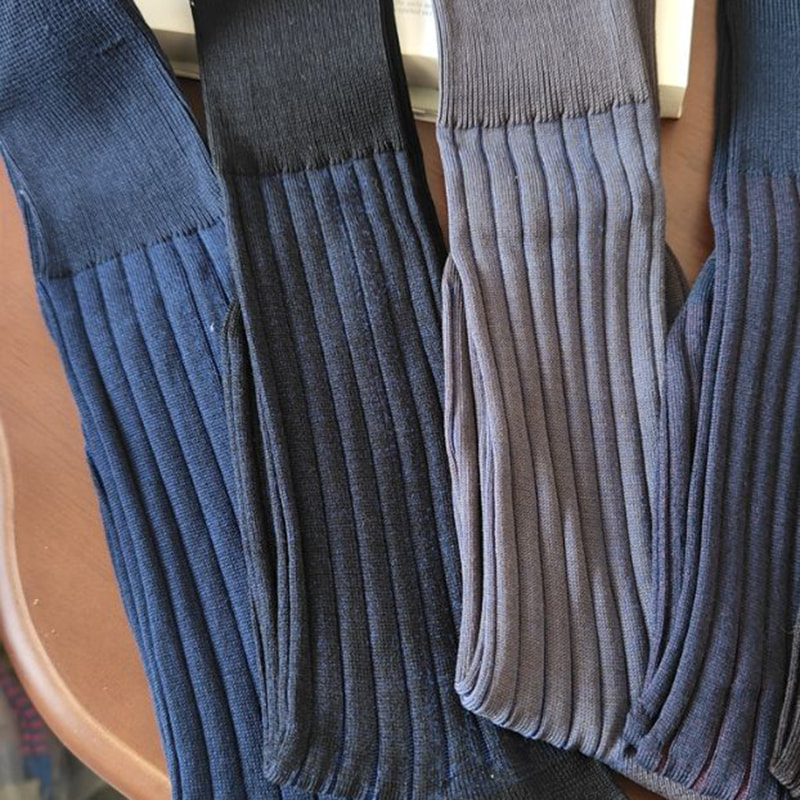
A sock that reaches the calf gives the gradient somewhere to travel. A longer style such as this one is designed for full length coverage over the ankle and lower calf:
Eight to twelve hours is the normal daily window for men's compression socks. That covers a work shift or a long flight but stops short of overnight, because ankles usually drain well enough when you are lying down. Take the socks off before bed unless a clinician has told you otherwise, and put your feet up for 20 minutes in the evening.
On travel days the timing rules tighten. Put the socks on before you leave the house, stand and walk every hour you are awake, and drink water rather than relying on salty airport food. Compression manages pooling, but it does not replace movement.
Wash the socks after every wear in lukewarm water, by hand or on a gentle cycle, and skip both the fabric softener and the dryer. Heat and softener break down the elastane that creates the gradient, so the same habits that extend the life of everyday socks apply here, and a two-pair rotation will outlast a single pair by a wide margin. These care and maintenance habits for men's socks are a good baseline for any sock you plan to wear daily.
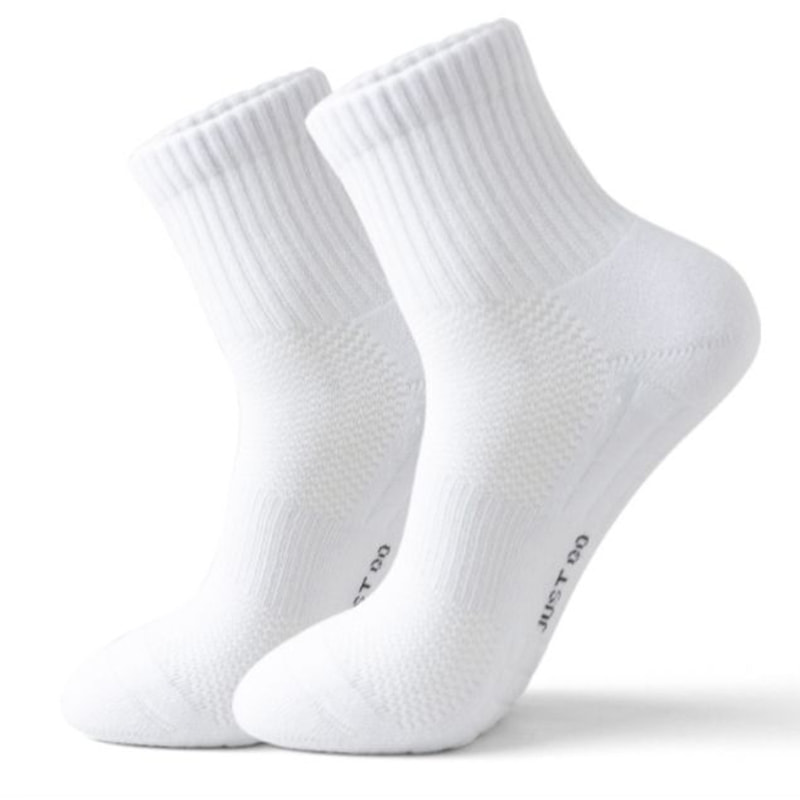
For training days, a sock with a cushioned footbed under a graduated upper is usually more comfortable than a thin medical stocking, especially in shoes that run warm. A towel-bottom sport style like this one handles the sweat and the impact:
Compression is not supposed to feel like nothing. A firm hug around the ankle and a light squeeze at the calf for the first hour is normal, and it usually settles once you start moving. What is not normal is numbness, a burning sensation, or a band that leaves a deep groove which takes more than 30 minutes to fade.
first week of wear, in cm 27.526.525.5Day 1Day 2Day 3Day 4Day 5Day 6Day 7Evening measurement, taken at about 7:00 PM
The line follows evening ankle circumference over the first seven days of consistent morning wear, starting at 27.2 cm and ending near 26.0 cm. The change is not dramatic on any single day, which is exactly why some men quit in the first 48 hours. Most of the drop happens between day one and day four, and the curve flattens after that. That shape is normal, because compression does not remove fluid permanently, it keeps the daily build-up smaller. A flat line in week two still means the sock is doing its job, especially if afternoon tightness and discomfort have eased. If the line climbs instead, check for folds in the fabric, a sock that has lost its stretch, or a medical cause that belongs with a clinician.
Comparing Sock Styles for Swollen Ankles
Three options come up again and again in this conversation, and they are not interchangeable. The chart below scores each one from 1 to 5 on the five things men mention most often, which are pressure control, calf coverage, all day comfort, ease of putting on, and breathability.
The radar chart scores three options against five things men usually care about when their ankles swell. Ankle-length short socks score well on breathability and are easy to put on, but they offer almost no calf coverage and weak pressure control above the ankle. A calf-length compression sock balances the five points, with solid pressure control, decent coverage, and moderate breathability for daily wear. A knee-high medical stocking controls pressure and covers the calf best, but it is the hardest to put on and the warmest in summer. The trade-off is worth naming clearly, because the more of the leg the sock covers, the more control you get and the more effort the sock asks of you each morning. For most working men with mild to moderate swelling, the middle option is the one that actually gets worn every day, and a sock in the drawer beats a stronger sock in the package.
Warning Signs That Mean Stop and Call a Clinician
Swelling in one leg only, especially with pain, warmth, or redness.
Sudden swelling together with chest pain or shortness of breath.
Toes that turn white or blue, or tingling that does not ease within 15 minutes of removing the sock.
Broken skin, blisters, or a rash under the sock.
Swelling that gets worse after several days of correct wear.
Compression socks manage a symptom, not a cause. Heart, kidney, liver, and vein conditions can all produce ankle swelling, and so can several common medications. If any of that applies to you, or if the swelling appears suddenly, get medical advice before you order a class of sock you may not need.
Good compression for swollen ankles comes down to three numbers and one habit. Measure the ankle and the calf in the morning, choose the class that matches your swelling rather than the strongest one on the shelf, and put the socks on before your feet touch the floor. Replace them every three to six months, or as soon as the top band stops snapping back, because relaxed fabric stops delivering the gradient the label promises.
Kombináciou tradičných čínskych prvkov s modernými trendmi a predstavením silného čínskeho štýlu prostredníctvom jedinečných vzorov tento štýl dizajnu spĺňa nielen personalizované potreby mladých ľudí, ale dodáva každodennému opotrebeniu jedinečné kultúrne kúzlo. Pokročilá technológia 3D tlače sa používa na vytvorenie vzorov a textúr na ponožkách viac trojrozmerné a živé. Táto technológia nielen zlepšuje presnosť a jasnosť vzorov, ale tiež robí ponožky rozpoznateľnejšími a módnejšími. Ako ponožky v polovici dĺžky sú ich dĺžka mierna, ktorá môže chrániť členky pred studenou inváziou na jar a jesenné obdobia a nebude príliš horúca a vlhká. Zároveň sú zmeny počasia v jarných a jesenných sezónach rozmanité a táto ponožka sa môže dobre prispôsobiť týmto zmenám, čo poskytuje pohodlný zážitok z nosenia nôh. Vytlačené na ponožkách sú vzory bohaté a rozmanité, môžu to byť tradičné čínske vzory, ako sú hory a vody, kvety a vtáky, draky a fénixy alebo tvorivé vzory, ktoré kombinujú moderné moderné prvky.
American TIE Dye je jedinečný proces farbenia, ktorý využíva špecifické techniky viazania a farbenia na vytvorenie bohatého a farebného vzoru a farebného gradientu na ponožky, čím sa zvyšuje zmysel pre módny zmysel a prispôsobenie produktu, Navrhnutá so strednou dĺžkou je vhodná pre športové opotrebenie, ako je basketbal, poskytuje dostatočné obaly a ochranu členku pred výronmi a inými zraneniami. Spodok je navrhnutý s hrubým uterákom, ktorý má výkon obviňujúci vlhkosť a dokáže rýchlo absorbovať pot z chodidiel, udržiavať ich suchý a pohodlný a počas cvičenia znižuje kĺzanie a trenie. Telo ponožky môže mať slučkový dizajn na zvýšenie hrúbky a teplo ponožiek, pričom zlepšuje pohodlie a mäkkosť nosenia. Vyrobená z čistého bavlnového materiálu, čistá bavlna má dobrú priedušnosť a prívetivosť pokožky, znižuje rast zápachu chodidla a bakteriálny rast a udržiavanie zdravia chodidla. Produkt môže obsahovať populárne prvky v štýle INS, ako je zladenie farieb a dizajn vzoru, aby bol viac v súlade s estetickými potrebami mladých spotrebiteľov.
Prijatie pokročilej technológie 3D tlače predstavujú vzory silný pocit trojrozmernosti a vrstvenia, vďaka čomu sú ponožky módnejšie a jedinečné. Vzory sú jasné a odolné, nie je ľahké vyblednúť a udržiavať vzhľad ponožiek ako nové po dlhú dobu. Existujú bohaté výbery vzorov, vrátane európskych a amerických pouličných štýlov, športových prvkov, graffiti umenia atď., Na uspokojenie personalizovaných potrieb rôznych spotrebiteľov. Vyberú sa vysokokvalitné bavlnené materiály s jemným dotykom a pohodlným pohodlím. Bavlnený materiál má dobrú priedušnosť, udržuje chodidlá suché, znižuje bakteriálny rast, rýchlo absorbuje a vypúšťa vlhkosť chodidla, udržiava chodidlá suché a pohodlné, vhodné na nosenie v jarných a letných sezónach. Ponožky majú dobrú elasticitu, dokážu úzko zmestiť rôzne tvary chodidiel a počas cvičenia znížiť trenie a nepohodlie.
3D ponožky, ktoré patria do kategórie krátkych ponožiek, integrujú európske a americké tradičné štýly s prvkami tlače. Prostredníctvom technológie 3D tlače sa na ponožkách prezentujú jedinečné vzory a vzory, vďaka čomu sú módnejšie a prispôsobenejšie. Európsky a americký tradičný štýl zvyčajne zdôrazňuje slobodu, individualitu a avantgardný výraz, s jasnými farbami, jedinečnými vzormi a rôznymi vzormi tlače, ktoré môžu zahŕňať karikatúry, anime, písmená, čísla, geometrické tvary atď.
Pomocou napodobňujúceho materiálu Cashmere má tento materiál jemný dotyk, ako je kašmír a izolácia. Vlákno napodobeniny je chúlostivé a môže účinne uzamknúť vo vzduchu, čím vytvára izolačnú vrstvu, ktorá poskytuje dlhotrvajúce teplo pre chodidlá. Vnútorná vrstva je zahustená kašmírou, aby sa zabezpečila, že aj v chladnom počasí môže pre nohy poskytnúť dostatočné teplo. Tento dizajn nielen zvyšuje efekt izolácie, ale tiež zvyšuje pohodlie nosenia, Vzhľadom na to, že pôda môže byť klzká počas jesenných a zimných období, produkt venuje osobitnú pozornosť výkonu proti sklzu. Použitím špeciálnych protišmykových materiálov a techník spracovania zaisťuje pri chôdzi väčšiu stabilitu a bezpečnosť. Tkanina produktu je odolná voči opotrebeniu a odolné, nie je ľahké pilietnice alebo vyblednúť a dokáže udržiavať dobrý vzhľad a výkon aj po dlhodobom nosení a umývaní. Je vyrobený z vysoko elastických materiálov, ktoré sa pri opotrebení zmestia rôzne tvary chodidiel a nôh bez akejkoľvek tesnosti alebo záhybov.
Použitie plyšového a zhrubnutého dizajnu môže účinne izolovať studený vzduch a poskytnúť trvalé teplo pre chodidlá. Zahustená plyšová vrstva nielen zvyšuje teplo, ale tiež zvyšuje pohodlie nosenia. Povrch ponožiek je vyrobený z kefovaného slučkového materiálu, ktorý má dobré teplo a pokožku. Kefovaná slučka môže uzamknúť viac vzduchu, tvoriť tepelnú izolačnú vrstvu a znížiť tepelné straty. Dĺžka dĺžky strednej trubice je teplá a módna, pokrýva oblasť lýtka a účinne zabraňuje invázii studeného vetra. Zároveň je tiež vhodné spárovať sa s rôznymi štýlmi jesene a zimnej obuvi, ako sú topánky, športové topánky atď. Produkt má tiež funkciu podlahových ponožiek a ponožiek uterákov, ktoré sú vhodné na nosenie v domácom prostredí. Mäkký materiál a pohodlný dotyk umožňujú nositeľovi vychutnať si teplo a pohodlie doma. Špeciálne spracovanie sa používa na zabezpečenie toho, aby sa ponožky počas nosenia a umývania nedali ľahko preliať vlasy, čím sa znižovali problémy s nepríjemnosťami a problémy s čistením spôsobené vylučovaním vlasov.
Produkt používa hlavne materiál Coral Fleece, ktorý je mäkkou, teplou a pokožkou, ktorá je veľmi vhodná pre jemnú pokožku detí. Niektoré výrobky môžu navyše kombinovať aj materiály, ako je jahňacie fleece, aby sa ďalej zvýšila účinok tepla. Coral Fleece a Lamb Fleece majú dobrý izolačný výkon, ktorý môže účinne uzamknúť teplotu a zabezpečiť teplú starostlivosť o nohy detí, zvlášť vhodné na nosenie v chladnej zime. Produkt obsahuje bohaté kreslené vzory, ako sú vianočné vzory, vzory zvierat atď. Tieto vzory sú nielen roztomilé a zaujímavé, ale tiež stimulujú fantáziu a záujem detí.
Ponožky sú vyrobené hlavne z koralových fleecov alebo jahňacích fleecových materiálov, ktoré majú izolačný výkon a sú mäkké a priateľské k pokožke a poskytujú deťom teplý a pohodlný zážitok z nosenia. Niektoré výrobky môžu používať zmiešané materiály, ako napríklad polyesterové vlákno (polyester), na zvýšenie trvanlivosti a priedušnosti ponožiek. Ponožky sú vytlačené rôznymi kreslenými vzormi, ako sú vianočné prvky (ako sú snehové vločky, Santa Claus, sob, atď.), Zvieracie vzory (ako sú medvede, králiky atď.), Zvýšenie zábavy a roztomilosti ponožiek, vhodné pre aesttetiká. Dizajn strednej trubice môže lepšie chrániť členky a teľatá bábätká a vyhnúť sa chladu a podlahové ponožky sú tiež vhodné pre deti, ktoré sa majú nosiť pri hre na podlahe kvôli svojmu mäkkému a nekvalitnému materiálu.
Koralové fleece hrubé lepiace ponožky ihly prijímajú priliehavý protišmykový dizajn na spodnej časti alebo kľúčové časti ponožiek, ktoré môžu zvýšiť trenie medzi ponožkami a zemou alebo podrážkou, zabrániť skĺznutiu počas chôdze alebo pohybu a sú obzvlášť vhodné na nosenie na hladkých povrchoch, ako sú domy a podlahy. Coral Fleece má dlhé vlákna a silné vzduchové vrstvy, ktoré majú dobrú izoláciu a výkon tepla, vhodné na nosenie v chladných obdobiach a môže účinne zabrániť tomu, aby sa chodidlá ochladili. Coral Fleece má mäkkú a jemnú textúru a pohodlný dotyk a môže zmestiť pokožku, zabaliť nohy, zmierniť únavu a poskytovať teplý a pohodlný zážitok z nosenia. Coral Fleece má dobrú priedušnosť a absorpciu vlhkosti, ktorá môže absorbovať nadmernú vlhkosť z nôh a rozptýliť ju cez póry, aby sa chodidlá udržali v suchu. Ponožky Coral Fleece majú tiež určité vlastnosti. Antibakteriálna a dezodorizačná funkcia pomáha znižovať rast baktérií a udržiavať chodidlá v čistote.
Prijatie špeciálneho konštrukcie proti sklzu, ako je adhezívne anti-skĺzavé dno, zvyšuje trenie so zemou, čím účinne bráni deťom skĺznuť na trampolíny, sklíčka a iné vybavenie. Dizajn s vysokým vrchom môže lepšie zabaliť detské členky, poskytovať ďalšiu podporu a ochranu, znížiť riziko výter a používať vysokokvalitné látky s dobrou priedušnosťou a absorpciou vlhkosti, aby sa chodidlá udržali v suchu a pohodlné, pričom sa vyhýbalo spokojnosti spôsobeným dlhodobým opotrebením. Špeciálne ošetrená tkanina má vysokú odolnosť proti opotrebeniu a počas aktivít detí vydrží časté trenie a ťahanie.
Dospelé ponožky jogy zvyčajne používajú špeciálne textúry alebo materiály, ako sú bodky proti sklzu v tvare bodky v spodnej časti, čo v skutočnosti bránia praktizujúcemu v skĺznutí počas pohybov a chrániť ich bezpečnosť. Protišmykové častice môžu byť zabudované do rohože jogy, aby sa zabezpečilo určitý odpor a zabránilo sa posunutiu chodidla pod tlakom hmotnosti, Jógové ponožky sú často vyrobené z absorpčných a rýchlo sušených materiálov, ako je mäkká bavlna, bambusové vlákno atď., Ktoré môžu rýchlo absorbovať pot z nôh, udržať ich v suchu a mať dobrú absorpciu vlhkosti a výkon privítania potu, čo pomáha znižovať nepohodlie spôsobené mokrými nohami a zlepšiť cvičebný zážitok.3
Používa sa vysokokvalitný materiál koralového fleece, ktorý má dobrý izolačný výkon a môže účinne zabrániť chladu chodidiel. Zahustený dizajn ďalej zvyšuje izolačný účinok ponožiek, dokonca aj v studenej jesennej a zimnej sezóne a poskytuje dostatok tepla pre vaše nohy. Materiál koralového fleece je mäkký a jemný, pohodlný na dotyk a nespôsobí podráždenie pokožky. Keď sa bude nosiť po dlhú dobu, nebude sa cítiť nepohodlne. Má dobrú elasticitu a môže zmestiť rôzne typy chodidiel, vďaka čomu je pohodlnejšia a pohodlnejšia na nosenie. Materiál koralového fleece má zvyčajne dobrý odpor opotrebenia a nie je ľahké pilulovať alebo deformovať, takže táto ponožka je relatívne odolná.